








Every morning, GP surgeries across the UK face the same challenge: call volumes spike at 8am, lines get busy, patients struggle to get through, and reception staff are stretched before the day begins. The result is missed appointments, frustrated patients, and increased pressure on reception teams, with many calls abandoned before they are answered. A modern VoIP phone system addresses this by routing calls intelligently, managing queues automatically, and giving your team the tools to handle high volumes efficiently. This guide focuses on practical decision-making — which VoIP systems fit different types of healthcare setups in the UK, what capabilities actually make a difference, and how to choose based on how your practice operates.
What This Guide Covers
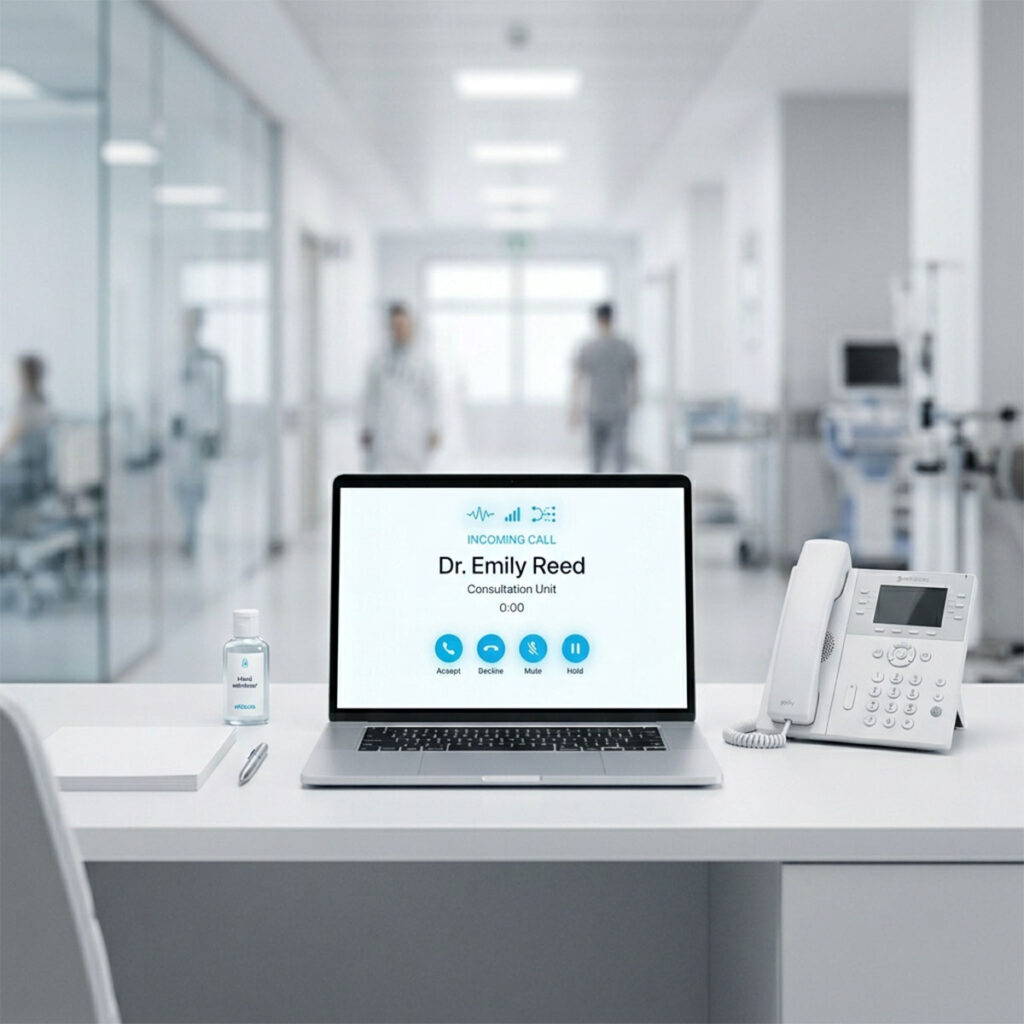
A VoIP system is suitable for healthcare if it supports how patient calls are handled in practice, not just basic calling features.
It should route calls clearly to the right team, manage queues during busy periods, and avoid adding extra pressure on reception staff. If patient-related data is involved, the system must provide proper access control and clear data handling compliance depends on how it’s set up, not just provider claims.
The system should also fit your existing workflow, either through integration or simple compatibility, so staff can handle calls without switching between multiple tools. Basic reporting, such as missed calls and call volumes, is also important to identify issues early
| Provider | Best For | Practice Size | Est. Pricing (excl. setup/hosting) | Setup Type | Integration Level | Support Type | Contract Flexibility |
|---|---|---|---|---|---|---|---|
| The VoIP Shop | Fully managed setup | SME | Quote-based | Fully managed | Basic | UK dedicated | Flexible |
| RingCentral | Multi-site scalability | Mid–Large | £12–£30/user/mo | Self/cloud | Native (EMIS+) | Global | Standard |
| 8x8 | Compliance/security | Any | £20+/user/mo | Cloud | Basic | Global | Standard |
| Vonage | EHR/CRM integration | Mid–Large | £15+/user/mo | Self/cloud | Deep API | Global | Flexible |
| Gamma | UK reliability | Any | Quote-based | Managed/cloud | Via partners | UK-based | Flexible |
| 3CX | Cost control | Any (with IT) | Free license; £135+/yr paid | Self-hosted | Via API | Partner | Highly flexible |
Compare top healthcare VoIP providers
Who it’s for: SME practices that don’t have an in-house IT team and want the system to just work.
The VoIP Shop handles setup, configuration, and ongoing support end to end. For practice managers who don’t want to become telecoms experts, this is the lowest-friction path to a properly configured system.
Key strengths:
Pricing: Quote-based contact for a tailored assessment
Choose this if: You want a hands-off solution with dedicated UK support from day one.
Who it’s for: Healthcare groups expanding across sites, or practices that need a scalable platform they won’t outgrow.
RingCentral is a mature, enterprise-grade cloud platform used by healthcare organisations globally. Adding a new site or 20 new users doesn’t require new hardware it’s done through the admin panel. For groups that are growing, that matters.
Key strengths:
Pricing: From approximately £12–£30 per user/month depending on tier
Choose this if: You operate across multiple locations or expect significant growth in the next 2–3 years.
Who it’s for: Practices and clinics where data security and regulatory compliance are non-negotiable priorities.
8×8 has built its platform with enterprise compliance in mind. For healthcare providers handling sensitive patient data across calls and recordings, 8×8’s security architecture including encrypted communications, detailed audit trails, and granular access controls reduces risk exposure significantly.
Key strengths:
Pricing: From approximately £20+ per user/month
Choose this if: Data security and compliance are your primary concern, not just a checkbox.
Who it’s for: Digitally mature clinics that rely on EHR, CRM, or patient management software and need their phone system to work within that ecosystem — not alongside it.
Vonage’s API-first architecture means it can connect deeply with platforms like EMIS, SystmOne, Salesforce Health Cloud, and custom patient management tools. When a patient calls, their record surfaces automatically. Staff don’t switch tabs — the information comes to them.
Key strengths:
Pricing: From approximately £15+ per user/month
Choose this if: Your team wastes time switching between your phone system and patient records.
Who it’s for: Practices that have been burned by call quality issues and want a system built on UK infrastructure, not routed internationally.
Gamma operates its own UK network rather than reselling capacity. In practical terms, this means more consistent call quality, faster fault resolution, and support from people operating within UK regulatory frameworks. For practices where call quality directly affects clinical communication, this matters.
Key strengths:
Pricing: Quote-based
Choose this if: Call reliability and local support responsiveness are your top priorities.
Avoid this if: You need heavy customisation or advanced software integrations.
Who it’s for: Practices with some in-house technical capability that want lower long-term costs and flexibility over how the system is deployed.
3CX is an open-standards platform that can be hosted on your own server, in the cloud, or through a hosting partner. The free tier handles small setups competently. For practices that want to avoid per-user monthly fees at scale, 3CX can significantly reduce total cost of ownership.
Key strengths:
Pricing: Free tier available; paid from approximately £135/year for standard features
Choose this if: You have some IT capability and want to reduce long-term telecoms spend.
Find the right system fit
Choose features that actually matter
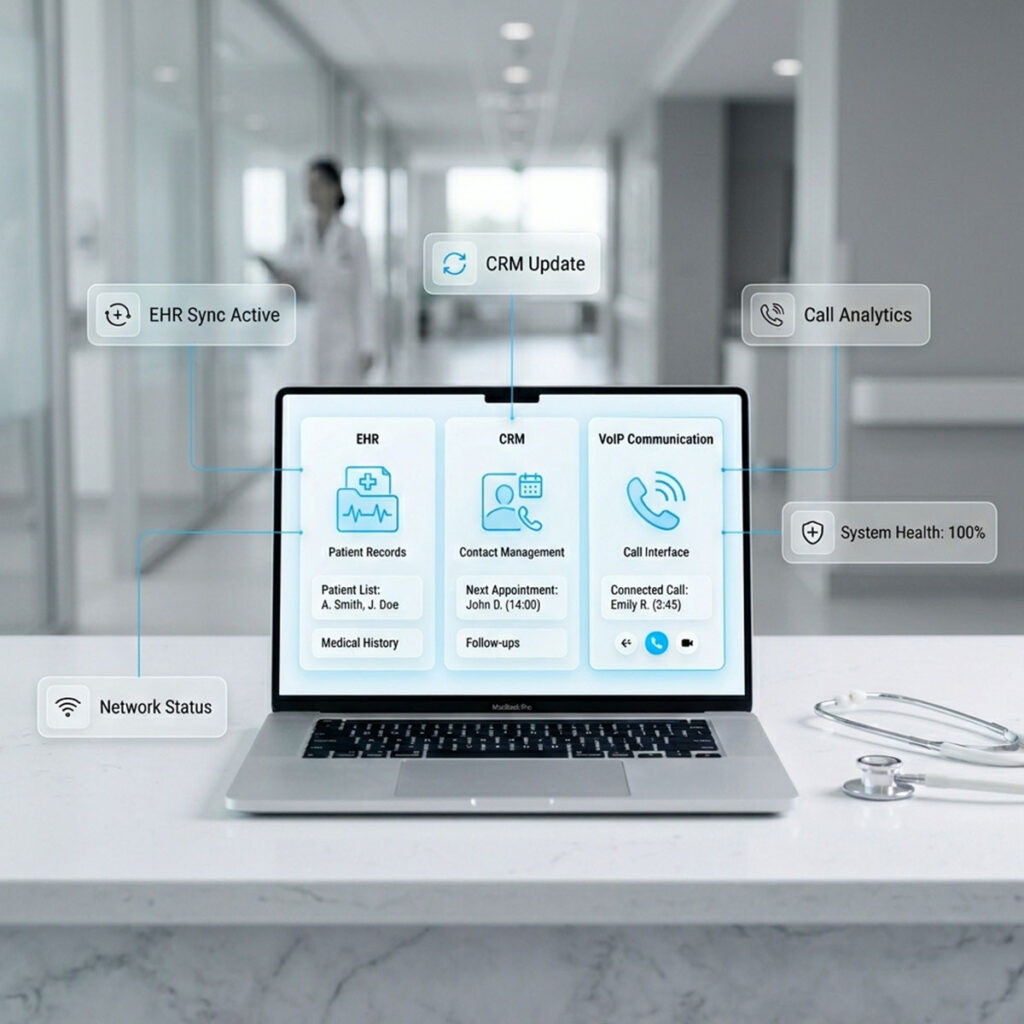
Your phone system should work within your existing clinical workflow — not require staff to switch between it and your patient records manually.
When a patient calls, their record surfacing automatically reduces handling time and the chance of errors. It’s worth confirming exactly how any provider delivers this before committing.
Key questions to ask:
Phone systems in clinical environments handle patient-identifiable data. “GDPR compliant” as a general claim isn’t enough you need specifics in writing.
Key areas to confirm :
Get the data processing agreement (DPA) confirmed in writing before go-live, regardless of which system you choose.
Most cloud-based systems are priced per user per month:
For a 15-person practice, expect to budget between £180–£525 per month for a fully capable system. Factor in setup costs, any hardware (handsets, headsets), and ongoing support when comparing quotes.
Managed solutions from providers like The VoIP Shop or Gamma are often quote-based because they include configuration, training, and dedicated support that generic cloud platforms don’t.
Estimate your monthly budget
Answer these four questions before speaking to any provider:
Find your ideal setup
At Compare Phone Systems we don’t sell a single system. We assess your practice call volume, site structure, existing software, team size and match you to the provider that fits your actual workflow. This means you’re not selecting from a brochure. You’re getting a recommendation based on what practices like yours are actually running, and what’s caused problems for others. We handle the shortlisting, the supplier conversations, and the setup coordination so your team isn’t spending clinical hours on a telecom’s procurement project.
For most GP surgeries, The VoIP Shop or Gamma offer the best combination of managed setup and UK reliability. For practices that use EMIS or SystmOne and want integrated call handling, Vonage or RingCentral are worth evaluating. The right answer depends on your call volume and whether you have in-house IT support.
Yes — provided you have a stable internet connection. Most healthcare-grade providers offer uptime SLAs of 99.9% or above. A backup 4G connection is recommended for practices where downtime carries clinical risk.
Yes, and this is one of VoIP’s core advantages over traditional systems. A single cloud-based system can manage calls across every site with shared routing rules, reporting, and administration.
Some do. Vonage and RingCentral both offer integration capability with major UK healthcare software platforms. Confirm directly with the provider which version of your software they support and what the integration involves technically.
For a managed deployment, most practices are live within 2–4 weeks. This includes number porting, hardware setup if required, call flow configuration, and staff training. Some providers can move faster for urgent switchovers.
Your existing numbers can be ported to the new system in most cases. There is typically a short porting window during which calls may briefly need to be forwarded. A good provider will manage this process for you.