








Missed calls during busy service hours often mean lost bookings and revenue. Many restaurants still rely on outdated phone systems that struggle to handle multiple enquiries, leading to delays, unanswered calls, and inconsistent customer service. This guide helps you find the best phone system for your restaurant based on how you handle calls, bookings, and peak demand. Explore the top options in the UK and choose the right fit for your setup, whether you run a single location or multiple sites.
What This Guide Covers
| Provider | Best For | Best Use Case | Starting Price (UK) | Key Feature | Setup Type |
|---|---|---|---|---|---|
| The VoIP Shop | Managed restaurant systems | Hands-off setup & ongoing support | Quote-based | Fully managed call handling | Managed |
| RingCentral | Multi-location restaurants | Multi-branch coordination | ~£18/user/month | Advanced call routing | Cloud |
| Dialpad | High call volume restaurants | Peak-hour call pressure | ~£20/user/month | AI call insights | Cloud |
| 3CX | Cost control & flexibility | Custom setups with lower long-term cost | Free (self-hosted) / ~£10/user hosted | Customisable call flows | Self/Cloud |
| bOnline | Small UK restaurants | Simple, low-cost setup | ~£12/user/month | Easy deployment | Cloud |
| Nextiva | Customer experience focus | Improving call handling quality | ~£25/user/month | Call analytics & CX tools | Cloud |
This comparison is a starting point. The right choice depends on how your restaurant handles calls daily, especially during peak service periods.
See which system fits you
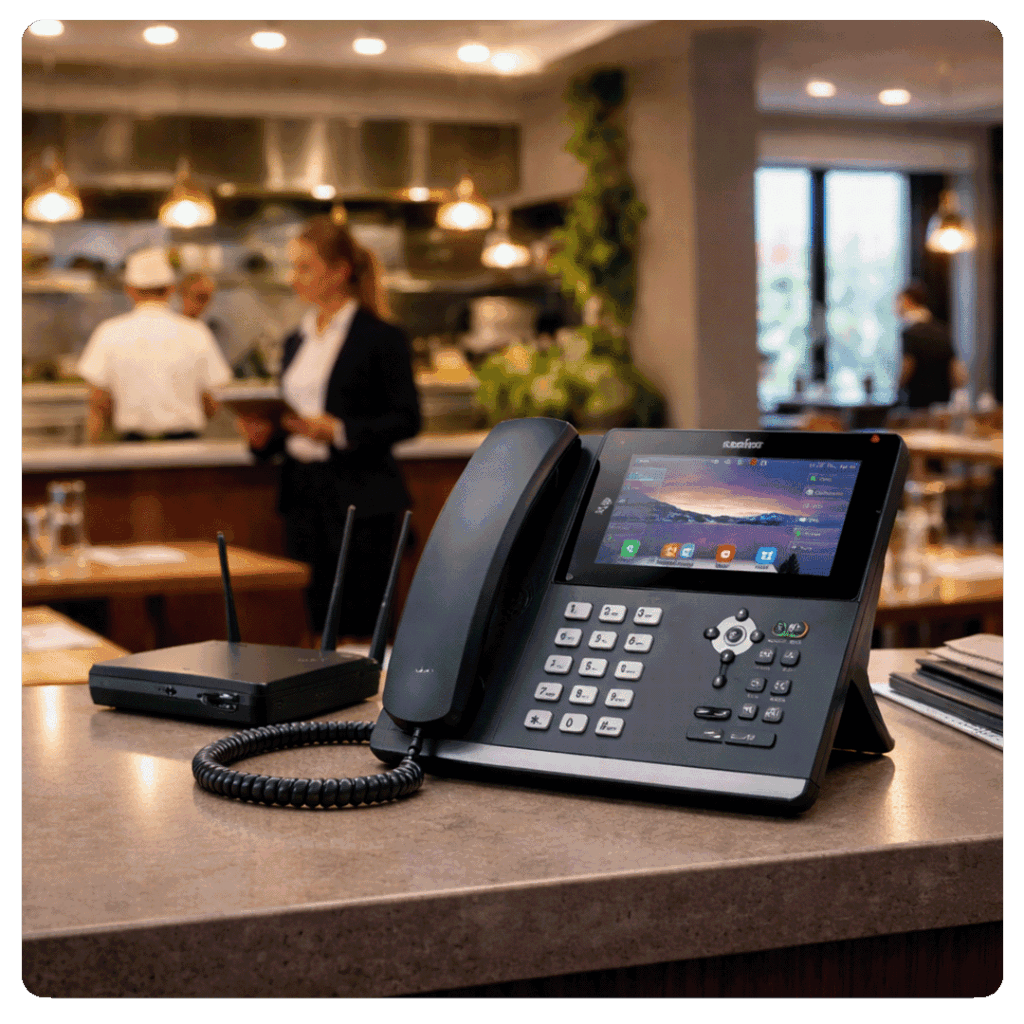
A VoIP phone system for restaurants runs calls through your internet connection instead of traditional landline systems. It means your team can field several calls at once, direct them to the right team or function (e.g., reservations or takeaway), and handle calls across mobile devices, desk phones, and tablets.
In practice, this means your restaurant can:
This makes it more suitable for restaurants that experience busy service periods and need reliable call handling.
UK PSTN switch-off deadline: January 2027
The UK is phasing out copper-based PSTN lines, so landline restaurants face a must-do switch to internet calling or risk service disruption. Traditional systems struggle to handle high call volumes at peak times, while VoIP can improve call handling when supported by a stable internet connection. The move delivers tighter control, real flexibility, and more reliable communication when properly configured.
Don’t risk outdated systems
Best for: Restaurants that want a fully managed system with no in-house IT
Why choose it:
How it helps restaurants:
Helps improve calls are handled correctly during busy service, reducing lost booking opportunities and removing the need for staff to manage the system.
Watch out:
Less suitable if you want full control over system configuration, such as managing call routing, custom settings, or making changes without provider support.
Best for: Restaurants operating across multiple locations
Why choose it:
How it helps restaurants:
Improves coordination across locations and prevents unanswered enquiries during high-demand times.
Watch out:
May be more advanced than needed for single-location restaurants
Best for: Restaurants handling high call volumes during peak hours
Why choose it:
How it helps restaurants:
Provides insight into call volumes and missed enquiries, helping reduce lost bookings and improve response times. This also makes it suitable for restaurants exploring AI phone answering systems to manage high call volumes more efficiently.
Watch out:
Advanced features may not be fully used by smaller teams
Best for: Restaurants that want control over setup and long-term costs
Why choose it:
How it helps restaurants:
Allows businesses to tailor call handling to their operations while keeping costs predictable and scalable.
Watch out:
Requires setup and ongoing management
Best for: Small or independent restaurants
Why choose it:
How it helps restaurants:
Provides a straightforward system for handling daily calls without unnecessary features or overhead.
Watch out:
Limited scalability for larger or multi-location businesses
Best for: Restaurants focused on improving customer interactions
Why choose it:
How it helps restaurants:
Helps improve how booking and enquiry calls are handled through analytics and communication insights.
Watch out:
Higher pricing compared to simpler solutions
Compare top systems for your needs
Choose features that actually matter
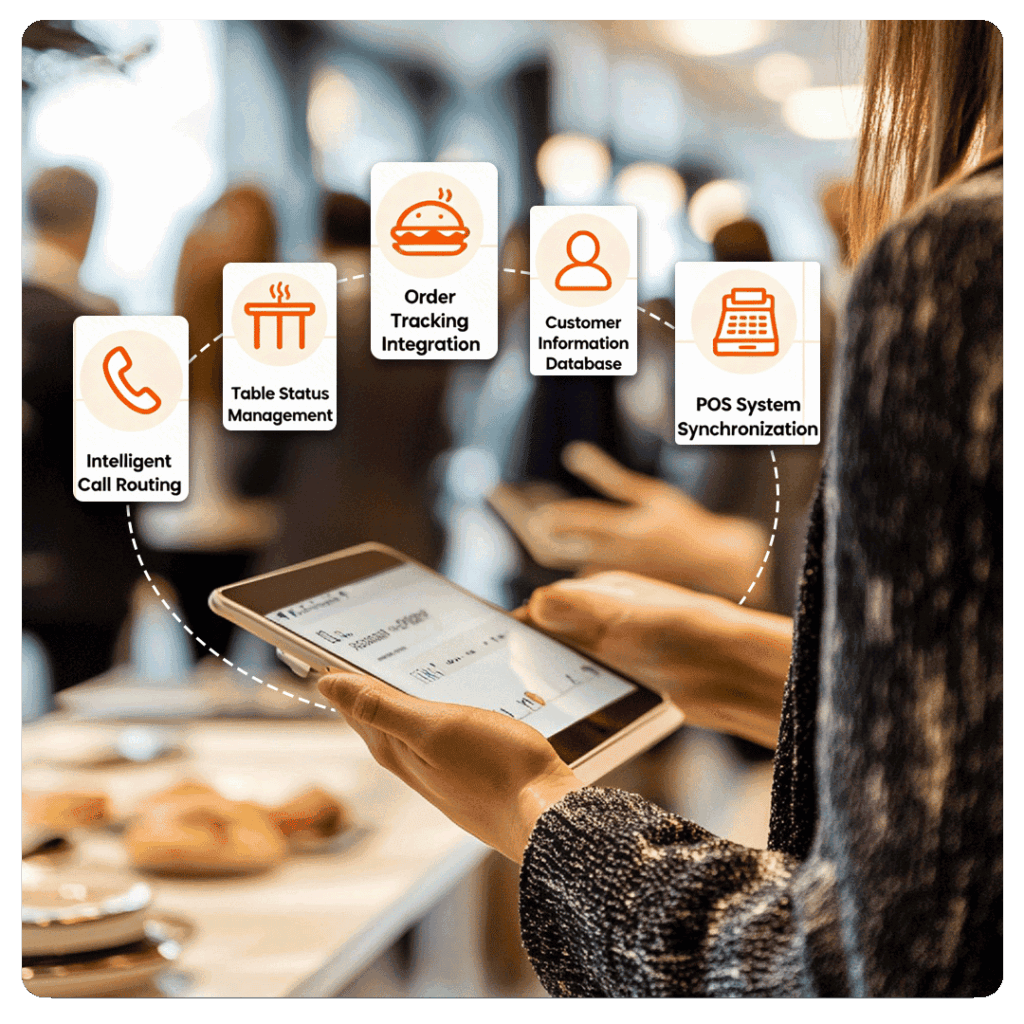
When comparing systems, the key difference is how they perform under real restaurant conditions. Traditional systems were built for static environments. Restaurants require flexibility, especially during busy periods.
| Aspect | VoIP System | Traditional System |
|---|---|---|
| Call handling | Multiple simultaneous calls | Limited lines |
| Flexibility | Works across devices | Fixed location |
| Call routing | Automated and customisable | Manual or limited |
| Scalability | Easy to expand | Requires hardware changes |
| Cost over time | Lower and predictable | Higher maintenance costs |
In practice, VoIP systems are generally better suited to restaurant environments because they adapt to demand rather than restricting it.
The cost of a phone system for restaurant use depends on features, number of users, and whether the system is managed.
In the UK, most systems range from £10 to £30+ per user per month. Lower-cost options suit small restaurants with basic needs, while higher tiers include better call handling, routing, and analytics for busy or multi-location setups.
Managed services, such as The VoIP Shop, are usually quote-based and include setup and ongoing support.
Pricing is indicative and based on typical entry-level plans as of April 2026. Actual pricing varies by features, contract terms, and number of users.
Get pricing tailored to your needs
Step 1: Match your service type to system type
Tailor the choice to your restaurant’s style. Takeaways and deliveries need gear built for call floods during peaks. Booking-focused spots gain from clear lines and simple reservation tools.
Step 2: Choose based on your setup
Match it to your locations. Single sites do well with straightforward or mid-range options. Multi-branch operations require seamless call shifting across outlets.
Step 3: Decide the level of control you need
Weigh up your hands-on preference. Go managed if setup and support feel like a chore. Opt for configurable if you value tweaks and tighter costs.
Step 4: Make the final choice based on fit
Zero in on what fixes your top pain point. Restaurants often win big with strong peak-time call control over the cheapest deal.
Get help choosing the right system
At Compare Phone Systems, we evaluate providers based on real-world use cases such as peak-hour call handling, routing efficiency, integrations, and pricing in the UK market.
We target eatery must-haves like peak call management, routing ease, integrations, UK prices, reliability, and lasting support.
Picks that cut unanswered enquiries, smooth bookings, and stay firm under pressure make the grade – practical advice for real restaurant life. Compare providers and request a quote fitted to your needs.
Small restaurants typically benefit from a simple and dependable setup that covers essential call handling without unnecessary complexity. A managed option like The VoIP Shop can be a suitable choice, as it provides setup, support, and ongoing management without requiring in-house technical involvement.
Yes, VoIP shines at managing multiple lines during busy spells systems like Dialpad queue calls smartly and offer tracking to balance demand, scaling effortlessly to ensure no customer waits too long.
VoIP works well with stable broadband, handling volume swings better than old lines – it delivers consistent quality for orders and bookings in fast-paced settings, with reliability depending on the provider and internet connection.
UK restaurant systems typically run £10 to £30 per user each month costs shift based on features like queuing or integrations you add, suiting most setups by balancing value and capability.
No, most VoIP options keep setup simple for non-tech users providers guide you through or managed services handle it all, getting you up and running quickly without specialist skills.
Still unsure? Get expert recommendations