


The Yeastar phone system is commonly considered by businesses looking to replace traditional PBX systems, move away from PSTN or ISDN lines, or adopt a more flexible VoIP-based communication setup. This guide explains how the system works, how it supports everyday business communication in the UK, and how it compares to other Business phone systems currently available.
The focus throughout this page is on helping you make an informed decision. It covers features, deployment options, UK pricing considerations, scalability, limitations, and real-world suitability, so you can clearly assess whether the Yeastar phone system aligns with your business needs, size, and future plans.
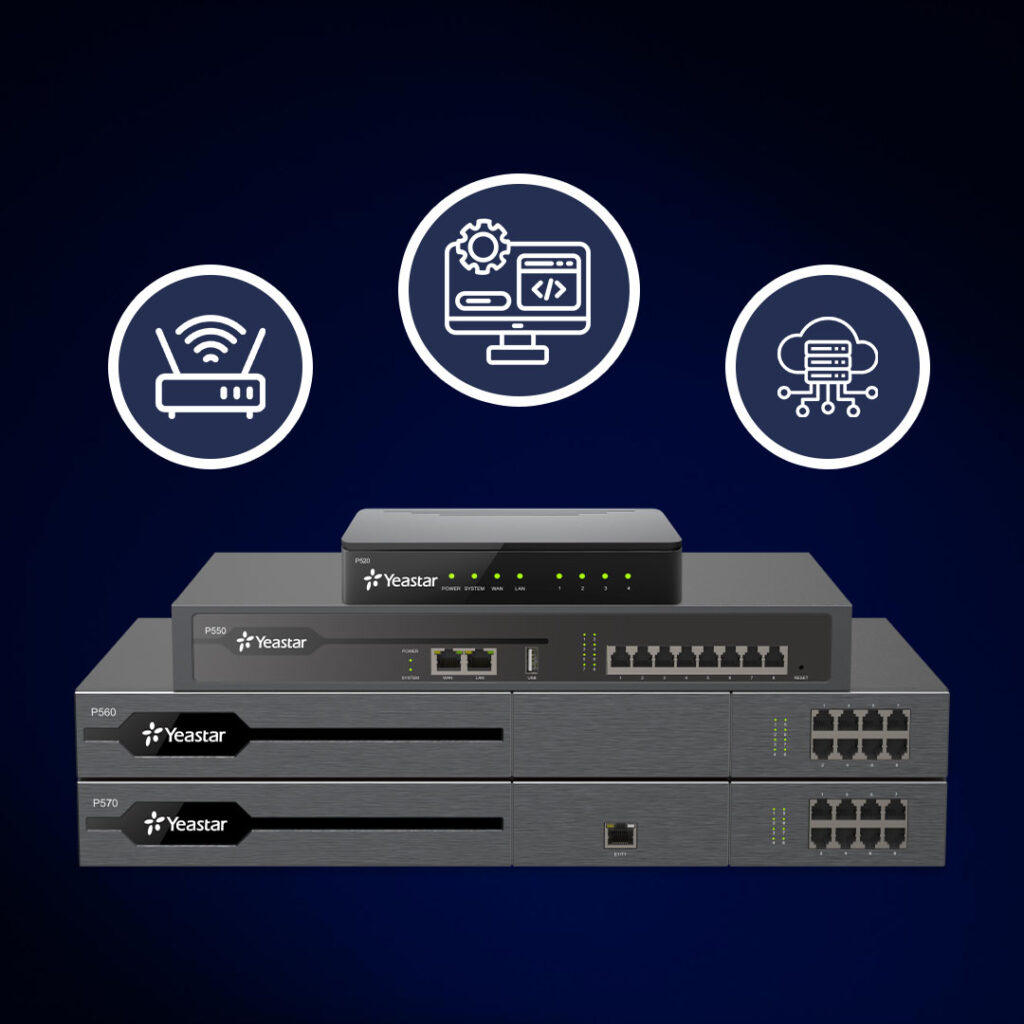
Yeastar Phone System manages voice calls, extensions, and call routing using VoIP technology instead of traditional phone lines. It functions as a modern replacement for legacy PBX systems. UK businesses handle internal and external calls over internet connections while retaining structured call control they expect from professional systems.
At its core, Yeastar acts as a central call management system. It connects desk phones, softphones, mobile apps, and SIP trunks into a single environment. Teams communicate internally and with customers more easily. Unlike basic cloud-only services, Yeastar gives businesses proper control over call handling, routing, recording, and department management.
Small to mid-sized UK organisations find it strikes the right balance. Professional features such as call queues, IVRs, voicemail management, and multi-site extensions, without the need for fully outsourced telecom. Deployment options include cloud-hosted, on-site installation, or hybrid solutions to match infrastructure preferences.
Yeastar uses VoIP technology to handle business calls over internet connections instead of traditional phone lines. It serves as the central call control platform, managing inbound and outbound calls, extensions, and routing rules from a single system.
Incoming calls arrive via VoIP or SIP trunk providers. The system directs them using IVR menus, ring groups, call queues, and time-based rules. Outbound calls follow the same consistent handling, delivering a professional caller experience throughout the organisation.
Yeastar supports cloud, on-premise, and hybrid deployment options. Desk phones, softphones, and mobile apps all connect into a single environment. Employees make and receive calls from any location. Administrators control everything through a central web interface.
Yeastar helps UK businesses replace traditional phone lines and manage growing teams without the cost and complexity of legacy PBX systems. It delivers structured call handling while remaining flexible enough for modern working patterns.
On a day-to-day basis, Yeastar improves how calls are managed across the organisation. Incoming calls reach the right teams more efficiently, reducing missed opportunities and improving customer experience. Employees stay connected whether working from the office, home, or mobile, using one consistent system.
As businesses grow, Yeastar maintains control without disruption. Users, extensions, and locations can be added without replacing the entire phone system, supporting steady expansion.
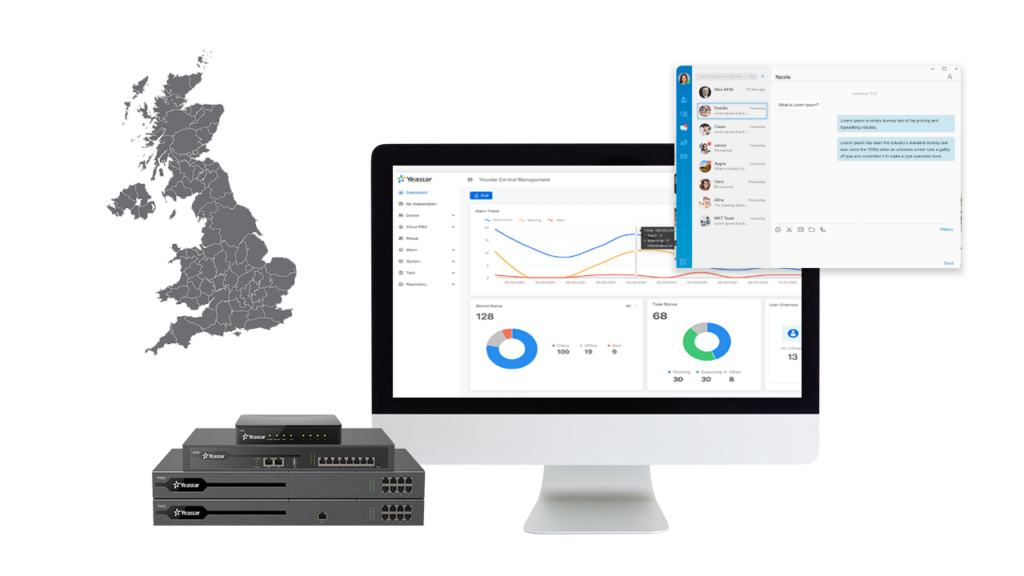
Yeastar gives UK businesses real choice in phone system setup. Pick what matches your budget, IT setup, and future plans. This flexibility stops you getting stuck with one hosting approach.
Cloud deployment keeps things simple. No on-site hardware is needed. Yeastar hosts everything remotely with minimal maintenance. Remote teams, multi-site firms, or businesses without IT staff find this works best.
On-premise installation runs locally on your network. It provides full control over data, security, and the phone system. UK companies with compliance needs, fixed offices, or server rooms usually choose this despite higher setup time.
Hybrid deployment mixes both approaches. Some services stay cloud-based, while others run on-site. This works well for businesses transitioning from older systems or managing locations with different requirements.
Your choice depends on control needs, team locations, and whether simplicity or ownership matters more.
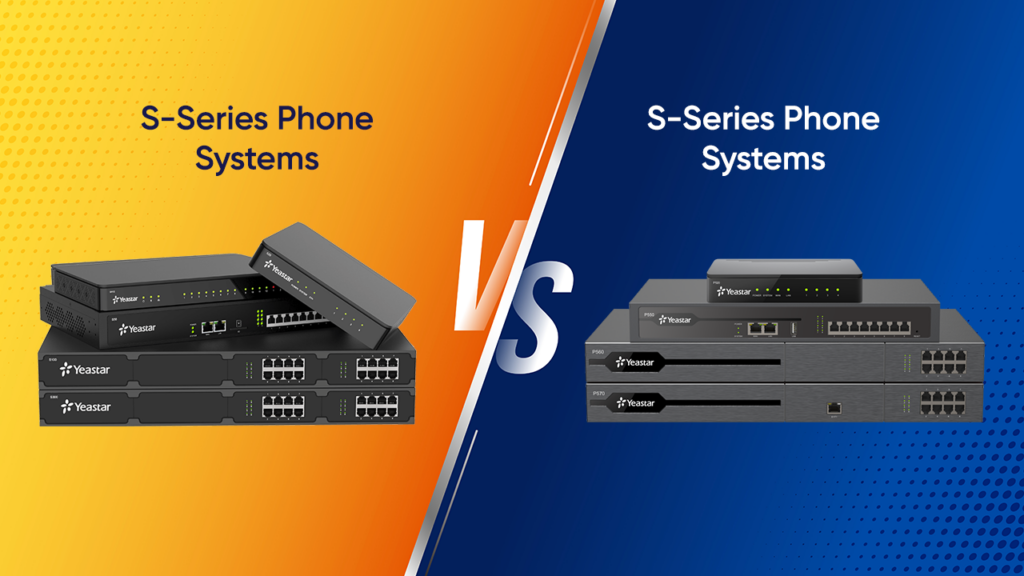
Yeastar offers two main product lines: P-Series and S-Series. Both handle business phone needs but serve different requirements and business types.
works as a modern software-based phone system. It supports cloud, on-premise, and hybrid setups. UK businesses with remote teams, multiple locations, or growth plans find it matches their flexibility needs.
Runs as a traditional hardware PBX appliance. It installs on-site for smaller businesses wanting simple, fixed setups without cloud reliance.
| Feature / Area | Yeastar P-Series | Yeastar S-Series |
|---|---|---|
| Platform type | Software-based PBX | Hardware PBX appliance |
| Deployment options | Cloud, on-premise, hybrid | On-premise only |
| Scalability | High, licence-based scaling | Limited by hardware capacity |
| Best suited for | Growing businesses, remote teams | Small offices with fixed needs |
| Remote & hybrid support | Strong native support | Limited |
| Management interface | Modern web-based interface | Appliance-based management |
| UK PSTN / ISDN readiness | Fully aligned | Suitable but less flexible |
| Recommended today | Yes | Legacy use cases |
UK businesses must replace traditional phone lines as PSTN and ISDN networks shut down. Yeastar handles this transition smoothly while keeping reliable daily communication.
Yeastar runs entirely over IP using SIP connections. Direct dial numbers, call routing, voicemail, and extensions all work as expected. There are no service gaps when UK providers retire legacy lines.
Businesses can migrate at their own pace. Cloud, on-premise, or hybrid setups match existing infrastructure and technical resources. Yeastar becomes a future-ready platform, not just a temporary fix.
Yeastar pricing depends on deployment type, user count, and the features needed. UK resellers customise setups for each business rather than offering fixed packages.
Cloud deployments charge per user per month. This includes core calling and hosting. Add-ons such as advanced recording or CRM integration increase costs. Predictable expenses suit businesses avoiding large upfront spends.
On-premise deployments require initial hardware and setup costs. Lower monthly fees cover licences and SIP trunks. This is more economical long term for businesses with stable user counts.
Cost factors include:
UK businesses find Yeastar’s mid-range pricing offers good value. It balances affordability with control and scalability. Contact providers with your requirements for accurate quotes.
Estimate Your Costs
Scales with business growth
Flexible cloud or on-site deployment
Improves team productivity
Lower telecom cost
Supports hybrid and remote work
Reliable for daily business calls
Advanced features included
UK partner and support ecosystem
Businesses looking for a fully hands-off, app-only phone system may find Yeastar too involved. While it offers strong control, it also requires initial configuration and ongoing system management, either internally or through a partner.
Very small teams or sole traders with minimal call volumes may not need the structure Yeastar provides. Simpler cloud-only phone services can be quicker to deploy and easier to manage in those cases.
Organisations with no IT support or telecom partner should plan carefully. Yeastar works best when someone is responsible for setup, SIP configuration, and call flow design.
Large enterprises with complex compliance, global call centres, or highly customised workflows may require dedicated enterprise platforms rather than a mid-market system like Yeastar.
Your best Yeastar setup depends on current operations and growth plans. Yeastar System’s real strength lies in offering genuine choice rather than forcing one approach.
Small businesses and startups usually pick cloud-hosted Yeastar. Low startup costs, no hardware hassles, and minimal IT work. Teams start calling quickly.
Office-based firms prefer on-premise installations. Full control over the phone system suits established locations with existing server rooms and IT teams.
Growing or multi-site businesses choose hybrid setups. Remote staff and new locations connect easily while keeping core systems stable and under control.
Quick guide:
Cloud → Small teams, remote work, simple setup
On-premise → Fixed offices, maximum control
Hybrid → Growth, multiple locations
The right choice upfront saves changes later. It matches today’s needs while handling tomorrow’s expansion smoothly.
Find Best Fit
Pick cloud, on-premise, or hybrid based on your IT skills, budget, and control needs.
Find a provider with UK numbers, solid call quality, and the capacity to replace PSTN or ISDN lines.
Set up cloud hosting or install hardware locally, depending on your deployment choice.
Build IVR menus, call groups, voicemail, business hours, and call handling rules.
Link desk phones, softphones, and mobile apps so everyone can make and receive calls.
Check inbound and outbound calls, routing, and voicemail to ensure everything works properly.
Yeastar fits UK businesses wanting reliable phone systems with proper control. Small to mid-sized organisations handling regular inbound and outbound calls find it replaces basic cloud solutions without enterprise complexity.
Office teams, hybrid workers, or multi-location firms run smoothly under one system. Companies leaving PSTN or ISDN lines keep familiar PBX features, including extensions, queues, and business-hour routing, all intact.
Growing UK businesses value the flexibility and scalability. Working with a telecom partner for setup and optimisation makes Yeastar a practical choice for controlled expansion.
Compare Phone Systems evaluates Yeastar alongside other UK business phone solutions. We position Yeastar as a flexible mid-market option that sits between basic cloud services and complex enterprise PBX platforms. Businesses get proper control, scalability, and reasonable costs.
We help UK companies compare Yeastar with alternative phone systems and providers. Clear guidance shows where Yeastar performs strongest and when different solutions work better. This comparison approach ensures businesses select phone systems that match their size, work patterns, and communication needs.
Compare With Others
Provider choice matters as much as the Yeastar system itself. UK partners handle supply, installation, and support, so their experience directly affects your results.
Good providers assess your needs properly. They recommend the right deployment type, configure everything correctly from day one, and handle ongoing updates as your business grows.
When selecting UK Yeastar providers, check for:
Knowledgeable partners turn Yeastar into a long-term asset. The wrong choice creates management headaches. Choose providers who understand UK business communication needs.
Choose Right Provider
Yeastar works well for UK businesses wanting reliable phone systems without enterprise complexity. Small to mid-sized organisations needing structured call handling, deployment flexibility, and growth scalability find it a strong fit, especially when leaving PSTN or ISDN services.
Not every business needs Yeastar, though. Companies wanting completely hands-off, app-only systems with zero configuration may prefer simpler cloud options. Very large firms with specialised requirements usually need advanced enterprise platforms instead.
Compare Yeastar against alternatives based on your operations, budget, and plans. Looking at features, deployment types, costs, and support together ensures the phone system matches both today’s requirements and tomorrow’s expansion.
Yes, Yeastar uses SIP trunks for full IP operation. Businesses keep direct numbers, extensions, voicemail, and routing. PSTN and ISDN lines are no longer required.
Yeastar fits small to medium UK firms needing call structure beyond basic cloud tools. The added control suits most growing teams; very small teams might choose simpler setups.
Yes, users connect via desk phones, softphones, or mobile apps to the same system. Hybrid teams stay linked without personal numbers. Setup remains straightforward.
P-Series is software for scalable cloud or hybrid use. S-Series is hardware for smaller on-site offices. Both handle VoIP but target different environments.
No, standard SIP IP phones work along with softphones and apps. Existing compatible hardware often transfers from prior systems.
Yeastar gives more configuration control than many cloud platforms. Growing firms benefit, though it involves extra management versus fully hosted services.
Yes, add users, extensions, and sites through licensing. Growth works within the chosen model without full replacement.
Yes, Yeastar can fully replace traditional PBX systems by providing the same core call handling features over VoIP, including extensions, call routing, IVRs, and voicemail, without relying on PSTN or ISDN lines, while offering lower running costs, flexible deployment options, and easier scalability for UK businesses.
Yes, Yeastar is compatible with major UK SIP trunk providers, enabling businesses to keep UK numbers, manage call costs, and migrate smoothly from PSTN or ISDN services.
You can find the right phone system by comparing your business size, call requirements, working style, and budget against available options. We helps UK businesses do this by evaluating systems like Yeastar alongside alternatives, focusing on features, deployment options, costs, and real-world suitability to support confident decisions.
Understanding how Yeastar works is a good start, but choosing the right phone system depends on how well it fits your business. Comparing Yeastar with other business phone systems and UK providers helps you see which option best supports your team and day-to-day calls. This makes the decision more straightforward.