
Businesses rely on PBX phone systems to direct calls smoothly, handle them efficiently, and monitor activity across the team. These systems reduce missed calls, improve response times, and maintain order as operations expand. Available types and pricing models vary, so the best choice depends on call volume, team structure, and growth plans. The UK’s PSTN switch-off is underway from 2025 to 2027, meaning traditional phone lines are being phased out and businesses are moving to VoIP-based PBX systems. Many companies are therefore adopting cloud VoIP PBX solutions to ensure long-term reliability.
Quick Summary
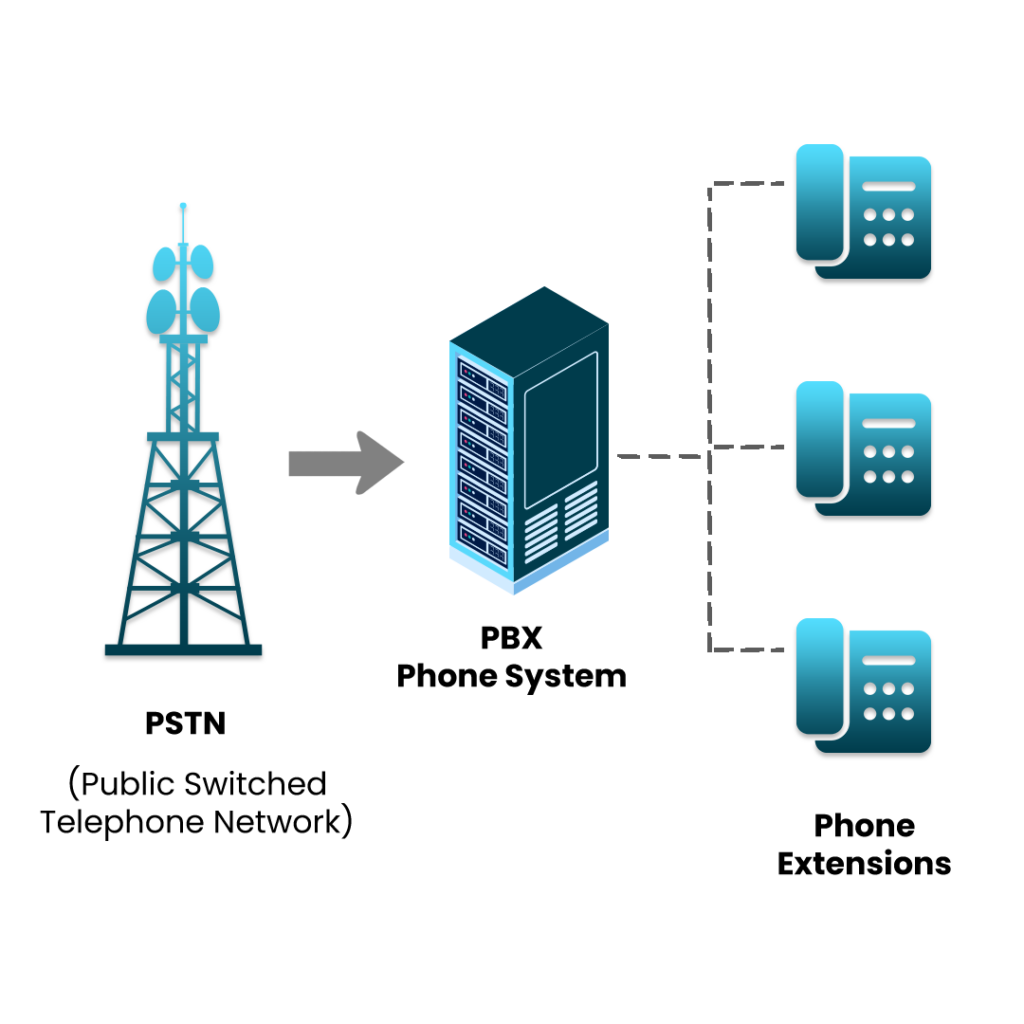
A PBX, or Private Branch Exchange, provides a private phone network for businesses. It connects staff through extensions and directs calls internally and externally.
Current PBX systems manage automatic routing, transfers, and voicemail without manual input. Many now use VoIP to transmit calls over the internet, which lowers costs and supports remote or multi-site teams.
A PBX system serves as the main control point for business calls. It manages everything automatically so staff can focus on their work. In VoIP PBX setups, this process runs over the internet. That cuts costs and adds flexibility for teams. The biggest benefit comes from automation. Calls get handled fast, which means better response times and fewer missed calls.
Typical call flow
A call arrives (incoming or outgoing)
PBX checks rules (extensions or departments)
It sends the call to the right person
If no answer, it forwards, queues, or goes to voicemail
Simplify your call flow
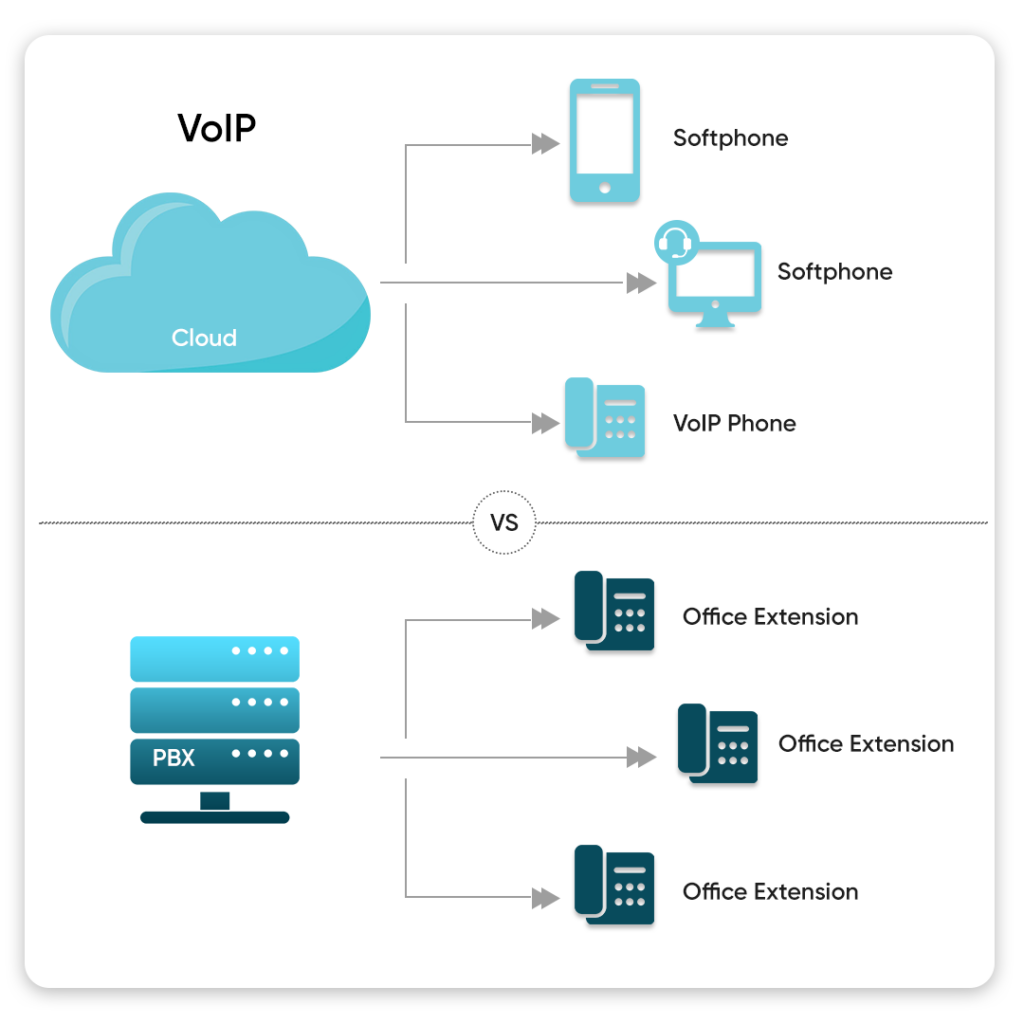
These terms relate closely but differ in their roles within business phone setups.
A PBX phone system serves as the central platform that manages calls in your business, for example by directing them to the appropriate person or department. VoIP acts as the technology that transmits those calls via the internet, bypassing traditional phone lines. A cloud phone system hosts the PBX through a provider, eliminating the need for on-site hardware installation or upkeep.
Simple Breakdown
Why Combine Them
Most businesses now combine all three elements—a hosted PBX driven by VoIP. This setup provides flexibility, lower costs, and simpler deployment. The right choice proves essential. A poor selection can raise expenses or impose limits as the business expands.
Pick the right setup
Businesses can choose from three main PBX phone system types. The best option matches your current setup, budget, and plans for growth. Each type works differently when it comes to installation, day-to-day management, and adding capacity.
A traditional PBX runs on physical phone lines and hardware kept right at your office. Your team installs and looks after it, which keeps things stable but makes it harder to adapt to flexible working patterns.
Key points:
An IP PBX connects through the internet rather than old phone lines. Calls process digitally, which brings more options and lower running costs than traditional setups.
Key points:
A cloud PBX sits online and is fully managed by the provider. No hardware goes on your premises, and your team can log in from anywhere – perfect for remote or spread-out groups.
Key points:
Most businesses pick cloud PBX. It makes management straightforward and handles growth without complicated hardware.
Find your ideal system
Unlock better call control
Centralised communication
One system manages all calls across the business. This makes tracking activity straightforward. Teams coordinate more effectively as a result.
Improved call handling and routing
Calls go directly to the right person or department. Wait times drop significantly. Fewer opportunities get missed in the process.
Scalability as your business grows
Adding users or features happens with ease. Cloud options make this particularly simple. No major changes to infrastructure prove necessary.
Support for remote and multi-location teams
Staff connect through mobile or desktop apps. They can work from any location securely. Communication remains consistent regardless of setup.
Cost efficiency over time
VoIP technology lowers phone bills noticeably. Extra lines become unnecessary altogether. Savings build up over the longer term.
Professional customer experience
Features such as IVR menus and queues create structure. Callers receive a consistent service. This builds trust with every interaction.

PBX phone system costs vary based on system type, features, and provider, but the total cost includes setup, monthly fees, and additional charges that are often overlooked.
Setup costs depend on deployment. Traditional PBX systems typically require £1,000–£5,000+ for hardware and installation, while IP PBX systems range from £500–£3,000. Cloud (hosted) PBX systems usually have minimal setup costs (£0–£500) since they are managed by the provider.
Monthly costs are charged per user. Basic plans start at £10–£20 per user, mid-range plans range from £20–£30, and advanced plans can reach £30–£60+ depending on features like integrations, analytics, and support.
Costs vary based on:
Additional costs may include call charges, hardware (phones/headsets), integrations, and maintenance especially for on-site systems.
As a general estimate, small businesses (5–10 users) spend around £50–£300 per month, while larger businesses can exceed £1,000 depending on complexity and usage.
The most accurate way to estimate cost is to match pricing with your actual requirements, rather than choosing based on monthly price alone.
Get real cost breakdown
| Provider | Best For | Setup Ease | Control Level | Support Type |
|---|---|---|---|---|
| The VoIP Shop | Managed solutions | Very Easy (no setup required) | Fully managed | Expert-led support |
| RingCentral | All-round use | Easy | Flexible (user + provider control) | 24/7 provider support |
| 3CX | Custom setups | Moderate–Complex | Full control (self-managed) | Self-managed / partner |
| 8x8 | Call centres | Moderate | Flexible (admin control) | 24/7 provider support |
| Vonage | Small businesses | Easy | Flexible (user control) | Provider support |
| Dialpad | AI features | Easy | Flexible (AI-assisted control) | Provider support |
Important:
Some options above are PBX platforms (software), while others are service providers/resellers offering customised setups. The right choice depends on whether you want a self-managed system or a fully managed solution.
The best option is not the most popular provider but the one that fits your team size, call volume, and required features without adding unnecessary complexity or cost.
Compare top providers fast
Small businesses benefit from straightforward call routing, basic extensions, and hassle-free setup. Hosted PBX works best here. It delivers professional call management without hardware costs or technical setup.
Call centres handle high simultaneous call volumes. They need queues, smart routing rules, and IVR menus. Priority goes to even call distribution, monitoring, and steady response times across agents.
Larger firms require support for various departments, complex routing, and links to existing tools. Scalability matters most. The system must manage more users, sites, and workflows smoothly.
Key Takeaway
Success comes from how well the PBX handles routing, team communication, and growth capacity. Base your pick on business structure to cut extra costs and changes down the line.

Best for:
Businesses that prefer fully managed PBX solutions
The VoIP Shop delivers customised PBX systems, often built on platforms like Cisco Webex Calling, with full setup, maintenance, and ongoing support handled by the provider.
Suitable for:
Pricing : Custom pricing based on business requirements
Best for:
All-round business communication
RingCentral provides a cloud-based PBX platform with strong reliability, scalability, and integration capabilities across various business tools.
Suitable for:
Pricing : £20–£50+ per user/month
Best for:
Businesses that need full control over deployment
3CX offers flexible deployment options, including cloud, on-premise, and hybrid setups, allowing businesses to configure the system based on their requirements.
Suitable for:
Pricing : Free tier available; paid plans scale with users
Best for:
Call centres and high-volume communication environments
8×8 supports advanced call handling, analytics, and global communication, making it suitable for businesses managing large call volumes.
Suitable for:
Pricing : £20–£60+ per user/month
Best for:
Small to mid-sized businesses
Vonage Business offers a balanced cloud PBX solution with straightforward setup, essential features, and scalability for growing teams.
Suitable for:
Pricing : £15–£35+ per user/month
Best for:
AI-driven communication
Dialpad focuses on AI-powered features such as call transcription, insights, and real-time analytics to improve communication efficiency.
Suitable for:
Pricing : £20–£50+ per user/month
Make the right decision
The best PBX system depends on how your business handles communication today and how it will grow in the future.
Focus on these key factors:
A suitable system should meet your current requirements while allowing flexibility for future growth.
To simplify your decision:
Small team, basic setup → Cloud PBX systems (simple and cost-effective)
Growing team, multiple departments → Scalable cloud PBX systems
High call volume, support teams → PBX systems with advanced call routing and queue features
Full control required → IP PBX or self-managed systems
This approach helps narrow down the right type of system before comparing specific providers.
Reviewing providers one at a time takes effort, especially with varied features, prices, and support.
Compare Phone Systems streamlines this with structured comparisons tied to your needs. Evaluate differences together in one spot for clearer choices.
This lets you:
The goal stays on effective solutions, not just any provider.
PBX systems generally run £10–£50 per user each month. Costs tie to features, provider choices, and support levels. Cloud options keep setup fees low or even zero upfront.
PBX differs from VoIP. PBX handles call management and direction inside your business. VoIP carries the calls across internet connections. Today’s PBX platforms mostly build on VoIP tech.
Cloud PBX stands out for small businesses. Setup stays cheap and straightforward. No on-site hardware is required. Systems can scale as the business grows.
Turn to PBX if customer calls come regularly or multiple staff manage them. It sorts routing clearly and lifts response speeds. Value grows alongside team and call loads.
Prioritise routing, IVR attendants, forwarding, and voicemail controls. Add CRM ties, recording, and mobile links where useful. Match to your call routines.
Cloud PBX handles remote and hybrid work smoothly. Apps on phones or desktops let staff call from anywhere. Office location drops out of the equation.
Firms shift for stronger handling, more options, and growth room. PBX cuts line dependencies and brings routing plus tool links. VoIP trims costs steadily.
A PBX system plays a central role in how your business manages communication. Choosing the right solution depends on your team size, call volume, and required features. Instead of comparing every option manually, you can quickly identify the providers that match your specific needs. Get matched with the right PBX system based on your requirements and compare options that actually fit your business.
Get your best fit