






Choosing the right business VoIP phone system in London goes far beyond technical choices. It shapes customer satisfaction, team efficiency, and your bottom line. Traditional lines face a full switch-off by 2027. Flexible working remains the norm. London businesses must now rethink how they manage voice calls. For example, businesses with multiple locations or remote teams need consistent call handling during peak periods without relying on a single office.
This page gives decision-makers a clear, practical guide to VoIP. You will compare the main system types available in the London market. You can also identify which options fit your setup and avoid costly mistakes. We focus on real suitability first. No provider hype. No pricing gimmicks. No feature overload. Just straightforward advice to match your needs.
London businesses operate in a high-cost, fast-moving environment. Office space is flexible, teams are increasingly hybrid, and customer expectations around availability are high. Traditional phone systems were not built for this reality.
For most London organisations, VoIP is no longer a “new” technology. It is the default long-term approach to business telephony. The real decision is which type of VoIP system fits the way your business works.
Several factors are accelerating the shift to VoIP:
Hybrid and remote working are now standard, not temporary
Offices move more frequently, often into serviced or shared spaces
Call volumes fluctuate and need to scale without disruption
The UK’s PSTN and ISDN switch-off is removing legacy options
A business VoIP phone system allows organisations to manage voice calls over an internet connection instead of traditional telephone lines. Unlike consumer calling apps, a business-grade VoIP system supports multiple users, shared numbers, call routing, and continuity when staff work from different locations.
VoIP converts voice into digital data and transmits it securely over IP networks. Calls can be made and received using desk phones, laptops, or mobile devices, depending on how the system is configured. A central system manages call handling even when teams are distributed.
VoIP is not a single product. It includes different system types with varying architectures, hosting models, and levels of control. Choosing the wrong setup often increases complexity instead of reducing it.
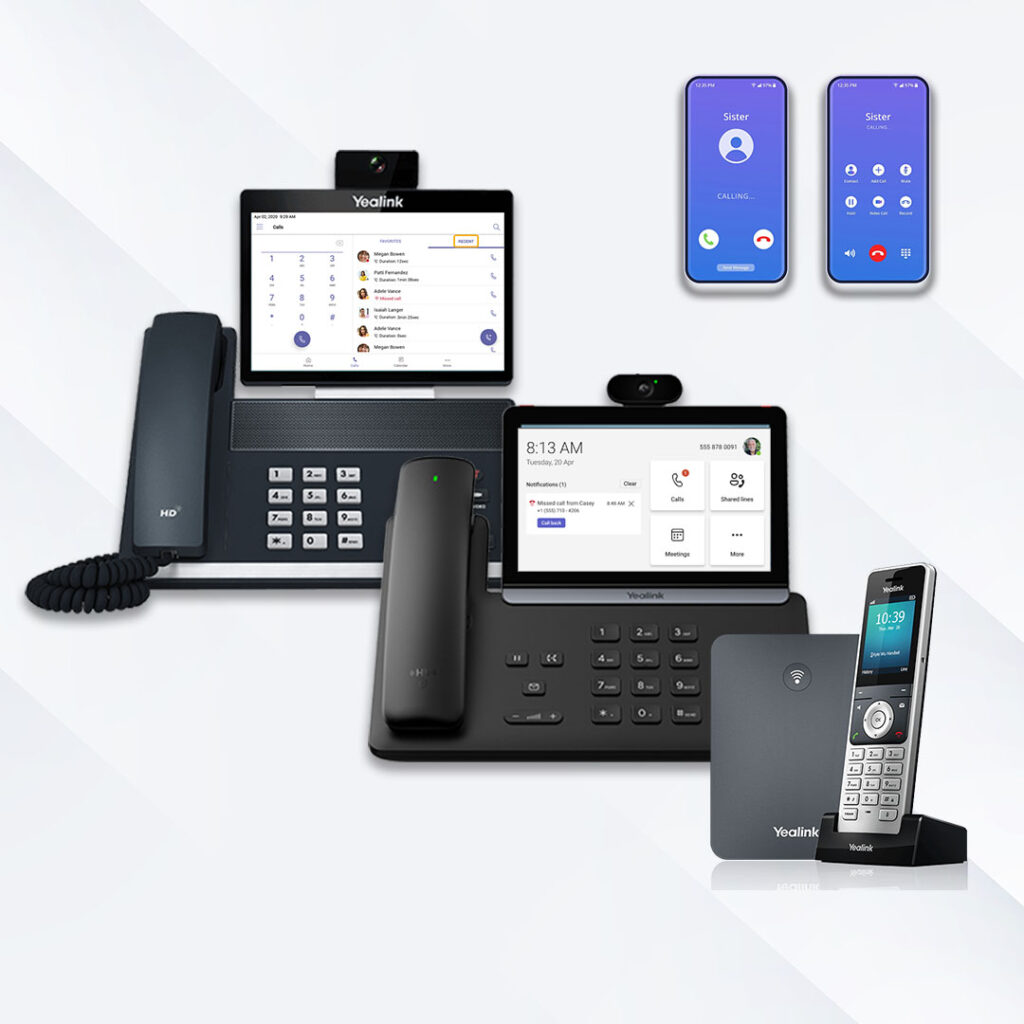
Before moving forward, it helps to clearly distinguish between VoIP-based systems and traditional landline setups, especially for businesses that have relied on fixed lines for years.
A hosted VoIP phone system is managed off-site in secure data centres. Businesses access the system via the internet using desk phones or software applications. There is no on-premise PBX to maintain, which reduces internal IT burden.
Best suited for:
Key consideration:
Reliance on internet quality means resilience planning is essential.
A Microsoft Teams VoIP phone system uses Teams as the interface for voice calls, integrating telephony into an existing Microsoft 365 environment.
Best suited for:
Key consideration
Advanced call handling and external call flows may require additional configuration or services.
Hybrid systems combine VoIP with limited on-site equipment or traditional lines. These are often used during transition periods or where full VoIP adoption is not immediately practical.
Best suited for:
Key consideration:
Hybrid systems increase complexity and should have a clear exit plan.
Find the right type
| Criteria | Hosted VoIP | Microsoft Teams VoIP | Hybrid VoIP |
|---|---|---|---|
| Setup speed | Fast | Medium | Slow |
| IT involvement | Low | Medium–High | High |
| Scalability | Excellent | Good | Limited |
| External call handling | Strong | Moderate | Strong |
| Long-term flexibility | High | Medium | Low |
| Risk of vendor lock-in | Low | High | Medium |
This comparison highlights why system choice should come before provider choice.
Compare VoIP Types
Calls are handled consistently regardless of staff location
User-based pricing reduces over-provisioning and wasted spend
Calls can be rerouted quickly during office moves or disruptions
System changes are handled through software, not engineer visits
VoIP integrates naturally with cloud based tools and workflows
Managers can monitor calls and adjust routing in real time without site visits.

Many businesses make the mistake of picking a VoIP system just because it’s cheap or popular. This often leads to problems later. A simple step-by-step check helps you pick the right one.
Step 1: Review your current calls
Map out how calls move through your business today. Spot where issues happen. Think about busy times, what customers expect, and how your team works together. Check if your internet can handle it clear calls need strong broadband.
Step 2: Plan
Choose a system that grows with you. It should adapt as your business changes. Look into security, rules for use, and support before deciding.
Step 3: Pick system first
Find the right system type before choosing who provides it. This gives you better deals and avoids bad contracts.
Choose the right system
At Compare Phone Systems, our role is to act as an independent guide. We do not sell VoIP services. Instead, we help businesses clarify their requirements, understand the implications of different system types, and identify the most suitable options.
We focus on reducing decision risk. That means highlighting trade-offs, asking the right questions, and ensuring that businesses are comparing like with like. By the time you request quotes, you should be confident that you are evaluating systems that genuinely fit your needs.
Not sure which phone system fits your business?
The UK’s traditional copper-based landline network is being permanently switched off by late 2027. This is not a temporary change or a technical upgrade. It marks the end of PSTN and ISDN services nationwide.
London businesses still using legacy phone lines will need to migrate to VoIP-based solutions. Delaying the move often leads to rushed decisions, limited system choices, and higher costs.
Planning the transition early allows businesses to align VoIP adoption with office relocations, system upgrades, or changes in working models such as hybrid teams.
Plan your switch
Yes, business VoIP works reliably in London with solid broadband. Systems now include backups and auto-rerouting to keep calls going. Many local firms use it daily for customers.
Yes, VoIP replaces landlines in most cases. It adds flexibility and scales easily as old networks end. London businesses see it as the smart long-term pick.
Switching takes days to weeks, based on your setup. Most firms phase it in to avoid downtime. Good planning makes it smooth.
Yes, small businesses love VoIP. It brings pro features at low cost, with easy setup and scaling. No heavy hardware needed.
Think team size, work patterns, growth plans, and network strength. Match the system to your needs first. Compare options before quotes to save hassle later.
Yes, number porting lets you keep your current ones. Customers notice no change. It’s standard in VoIP switches.
Yes, VoIP suits sales and support perfectly. Calls route anywhere, not just desks. It keeps teams responsive.
Get a Free Quote for a Business VoIP Phone System in London
Once you understand which type of VoIP system fits your business, the next step is to compare suitable options and obtain quotes based on real operational requirements. We help ensure that comparisons are made on a like-for-like basis, reducing the risk of unexpected costs or limitations later.