

Introduction
If you are researching business phone systems in the UK, you will almost certainly come across three terms: SIP, VoIP, and PBX. Most providers and websites talk about these as if they are different products you must choose between. That is what causes confusion.
In reality, SIP, VoIP and PBX are not competing systems. They are three parts of the same modern business phone setup. Understanding how they fit together is the key to choosing the right phone system for your company.
This guide explains SIP vs VoIP vs PBX in simple business language and helps you compare them properly so you can make the right decision.
What is the difference between SIP, VoIP and PBX?
Quick answer:
The simplest way to understand these three technologies is to look at what each one does in a phone call.
- VoIP is how the voice travels over the internet.
- SIP is how the call is connected, controlled and ended.
- PBX phone system that decides where the call should go inside your business.
They are not alternatives. They work together to create a complete business phone system.
Why SIP, VoIP and PBX are confusing for businesses
Most telecom providers use these words as marketing labels. One company sells “VoIP phone systems”, another sells “SIP trunking”, and another sells “cloud PBX”. This makes it look as if businesses must choose one of them.
What happens is that most modern business phone systems use all three. The real decision is how they are combined and delivered.
How a business call really works
When someone calls your business, three things happen:
- First, their voice is converted into digital data and sent over the internet using VoIP.
- Next, SIP connects that call to your phone system and keeps it open.
- Finally, your PBX routes the call to a person, department or voicemail.
- This is how cloud phone systems, hosted PBX platforms and modern office phone systems all work.
What is SIP and what does SIP trunking do?
SIP, or Session Initiation Protocol, is the technology that controls phone calls over the internet. It tells a call when to start, where to go and when to end.
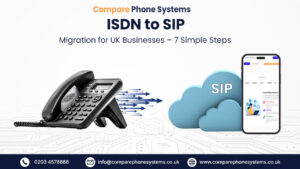
In business telephony, SIP is delivered through SIP trunking. SIP trunks replace traditional phone lines with internet-based connections to the phone network. Instead of paying for physical lines, businesses pay for virtual call channels.
SIP trunking allows companies to:
- Scale call capacity up or down
- Reduce line rental costs
- Connect multiple offices
- Integrate with PBX systems
What is VoIP and why UK businesses use it
VoIP, or Voice over Internet Protocol, means making phone calls over the internet instead of traditional copper phone lines.
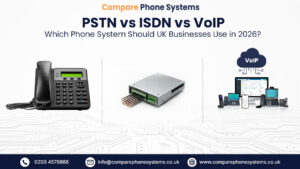
This is now essential in the UK because the PSTN and ISDN networks are being switched off. Businesses that do not move to VoIP will no longer be able to make or receive calls.
VoIP also allows modern features such as mobile apps, softphones, call recording and video calling.
What is a PBX system?
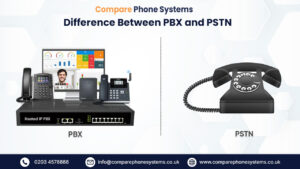
A PBX (Private Branch Exchange) is your business phone system. It manages:
- Extensions
- Call routing
- Voicemail
- Call queues
- Auto-attendants
There are three main types: traditional PBX, IP PBX and hosted or cloud PBX. Most UK businesses now choose hosted PBX systems because they are cheaper, easier to manage and better for remote working.
SIP vs VoIP vs PBX The real comparison
A modern business phone system is not one product. It is a stack of technologies.
SIP controls calls by managing how they start, connect and end.
VoIP carries calls by transmitting the voice over the internet.
PBX manages calls by deciding where they go inside your business.
Your call quality, reliability and flexibility depend on how well these three layers are connected.
Not Sure Which Phone System to Choose?
Cost comparison (where businesses really save money)
VoIP controls call costs.
Because calls travel over the internet instead of copper lines, local, national and international calls are much cheaper. This directly reduces what you pay per minute.
SIP controls line costs.
SIP trunking replaces physical phone lines with virtual call channels. You stop paying for unused lines, installation and line rental, and instead only pay for the call capacity you actually use.
PBX controls system costs.
Traditional PBX requires hardware, maintenance and upgrades. Cloud PBX removes all of that and charges you per user, turning a large upfront investment into a simple monthly fee.
Why this makes business phone systems cheaper
Traditional systems force you to pay for hardware, unused lines and engineering contracts whether you need them or not. When your team grows, costs rise sharply because everything must be physically upgraded.
SIP, VoIP and cloud PBX remove this waste. You only pay for active users and call capacity, so when demand changes, your bill changes too. This is why modern business phone systems are lower-cost, scalable and predictable.
Scalability and growth (why cloud systems win)
Traditional PBX systems are built for a fixed number of users. When you reach that limit, adding more people means installing new hardware, adding more phone lines and sometimes replacing the system. This makes growth slow and expensive.
Cloud PBX using SIP and VoIP works differently. You can add or remove users in minutes, create new numbers instantly and connect new offices without engineers visiting the site. Your phone system grows when your business grows.
Reliability and call quality (why internet calling is now safer)
Old phone systems depend on physical cables and local exchanges. When something fails, calls stop and there is no automatic backup.
Modern SIP and VoIP systems use multiple data centres and internet routes. If one route fails, calls are automatically sent another way. This gives better call quality and more reliable service than traditional phone lines.
Remote and hybrid working (why old PBX is no longer viable)
Traditional PBX systems are designed for one physical office. When staff work from different locations, calls become difficult to manage and customer service suffers.
Cloud PBX removes this limitation. Staff can answer business calls on desk phones, mobiles or laptops from anywhere, while customers still reach the same business number. That is why cloud PBX is now standard for UK businesses.
Which phone system should you choose?
Small businesses
Hosted PBX with SIP and VoIP gives professional call handling without large costs.
Growing businesses
Cloud PBX with SIP trunking allows easy expansion, new offices and higher call volumes.
Large organisations and call centres
SIP enabled PBX systems provide high capacity, advanced routing and CRM integration.
Remote teams
Cloud PBX is the only practical solution.
See Which Phone System Fits Your Business
FAQ
1. What is the difference between SIP, VoIP and PBX?
VoIP carries the voice over the internet, SIP controls how the call is connected, and PBX manages where the call goes. They are not separate systems but layers of one solution. A modern business phone setup uses all three together.
2. Is SIP better than VoIP?
SIP is not better than VoIP because they do different jobs. VoIP moves the voice, while SIP sets up and controls the call. You need both for a working phone system.
3. Do I need a PBX if I use VoIP?
Yes, because VoIP only sends the call and does not manage it. A PBX is needed to route calls, run extensions and handle voicemails. Even cloud systems are PBXs.
4. What is SIP trunking in simple terms?
SIP trunking replaces physical phone lines with internet based call channels. It connects your PBX to the public phone network. This reduces line costs and improves scalability.
5. What is a cloud PBX?
A cloud PBX is a business phone system hosted online instead of in your office. You access it using desk phones, mobiles or apps. It removes the need for hardware and maintenance.
6. What is the best phone system for UK businesses?
A hosted cloud PBX using SIP and VoIP is the best option. It supports remote working, low costs and easy scaling. It is also compliant with the UK PSTN switch-off.
Conclusion
For almost every UK business, the smartest choice is a hosted cloud PBX powered by SIP and VoIP because it delivers lower monthly costs, effortless scaling, full support for remote and hybrid working, built-in compliance with the UK PSTN and ISDN switch-off, and a future-proof phone system that grows with your business anything else is simply outdated, overpriced, or both.
SIP trunking vs VoIP vs Hosted PBX
These are not competing products they are different layers.
- VoIP carries the voice
- SIP trunking connects your phone system to the outside world
- Hosted PBX controls all call handling inside your business
Most UK providers bundle all three into one service. You are not choosing between them you are choosing who provides and manages them.
Compare and Choose the Best System For your needs