





Finding the right SIP trunking provider in the UK now involves more than simply comparing call prices. With the steady shift away from PSTN and ISDN networks now in full swing, businesses need a smooth move to internet phone services to keep calls flowing without a break. Not all providers offer the same level of reliability, flexibility, or support. Some keep costs low with simple channel rentals and basic support, while others focus on structured migration from legacy systems, structured onboarding processes, and scalable long-term solutions. The right provider depends on your team’s call patterns, in-house skills, and your organisation’s tolerance for operational risk. This guide explains SIP trunking clearly, the reasons to leave ISDN, how UK choices stack up, and what to evaluate before requesting quotations, helping you pick wisely on real needs rather than headline pricing.
Many businesses continue using phone systems designed for smaller teams long after expansion. As call volumes rise and teams operate across multiple locations, these systems often face challenges with reliability, visibility, and cost management.
Common indicators include dropped calls during peak periods, limited call reporting, delayed support responses, or increasing costs when adding users or sites. Enterprise phone systems address these issues from the outset, supporting growth without interruption.
If your organisation depends on significant inbound or outbound calls, operates from various locations, or anticipates further expansion, selecting the right enterprise phone system provider is a strategic business decision, not just a technical upgrade.
When a user places a call from a desk phone or softphone, the PBX turns the voice into digital packets and sends them along the SIP trunk through the provider’s network to connect with landlines or mobiles.
Each channel carries one call at a time, so if your business sees 30 calls at peak times, you will require approximately 30 channels to avoid call congestion and busy signals. An advantage over ISDN is the ease of change: you adjust capacity via settings alone, without installing new physical lines, which supports growing teams or periods of lower demand.
Most UK providers handle number porting, new numbers, calls across sites, and basic failover options. For steady quality, review their infrastructure alongside your bandwidth, latency, and network stability before you switch.
The UK withdrawal of PSTN and ISDN services means a switch to IP-based voice services is now essential for every business. Without this step, services could face sudden cut-offs, leaving teams unable to make or take calls.
SIP brings practical operational benefits too, like easy adjustments to call channels, support for staff working from home or office, simpler handling across locations, and ties into modern IP setups. If your current PBX works well, SIP offers a lower-disruption upgrade to your connectivity without a full overhaul. For those ready for a completely new system, hosted VoIP might fit better, depending on long-term strategy and internal capability.
Prepare before switch-off
The terms are often used interchangeably. They are not identical.
VoIP (Voice over Internet Protocol) describes making calls over the internet instead of traditional lines.
SIP (Session Initiation Protocol) is a signalling protocol used to establish and manage those VoIP calls.
VoIP = the overall technology
SIP = one of the mechanisms that enables it
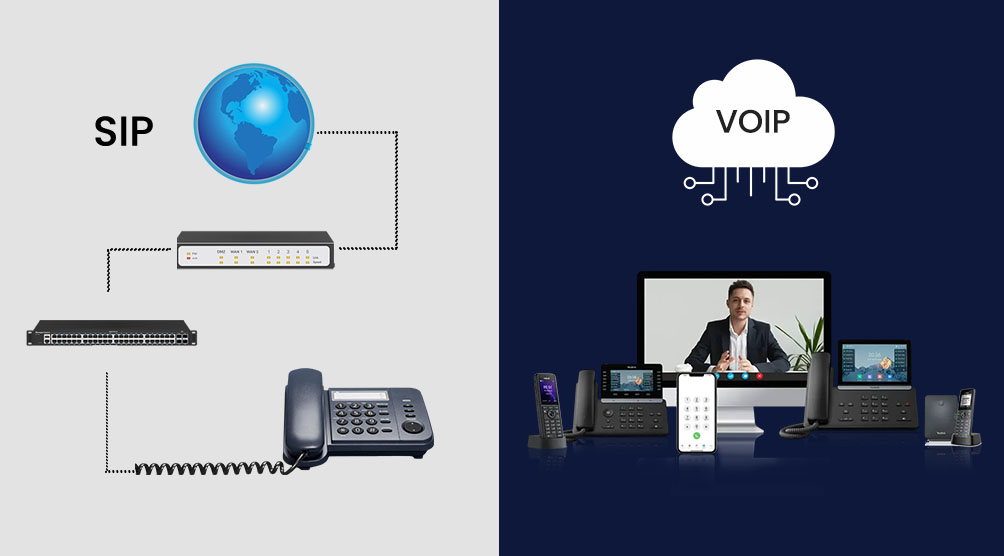
If you want to keep your existing PBX and modernise connectivity → SIP trunking.
If you want to replace your phone system entirely with a cloud platform → hosted VoIP.
Choose the right solution
We reviewed top SIP trunking providers in the UK through structured commercial evaluation criteria, focusing on operational factors rather than marketing claims to assess real-world performance.
This meant clear pricing on channel fees, call costs, setup charges, and contract details from the start; easy contract terms with simple ways to adjust or leave; quick scaling of channels to match changing needs; reliable support for shifting business numbers over; hands-on guidance for setup and moves rather than going it alone; dependable networks with solid uptime and fallback options; and good fits for small teams, growing firms, or larger operations. In short, we aimed for choices that suit your daily flow, hold costs steady, and reduce implementation risk.
| Provider | Typical Channel Pricing | SLA Level | UK Data Centre Presence | Support Model | ISDN Migration Support | Best For |
|---|---|---|---|---|---|---|
| The VoIP Shop | £6–£12 per channel | Business-grade | UK-hosted infrastructure | Fully managed | Guided onboarding & number porting | SMEs needing structured migration |
| BT | Custom enterprise pricing | Enterprise SLA | National UK infrastructure | Enterprise-managed | Formal project-based migration | Large / multi-site enterprises |
| RingCentral | Platform-based pricing | Platform SLA | UK + global cloud | Platform-managed | Migration as part of UC rollout | Cloud-first organisations |
| 8x8 | Subscription model | Enterprise-grade | UK + global cloud | Cloud-managed | Structured deployment support | Multi-site & international firms |
| Vonage | Subscription model | Business SLA | UK + global cloud | Flexible / API-driven | Support varies by package | Integration-focused businesses |
Compare providers properly

The VoIP Shop focuses on providing managed SIP services rather than simply selling connectivity. This means they typically support businesses through setup, number porting and configuration rather than leaving everything to internal IT teams.
This provider is often suitable for:
If your team prefers guided implementation and UK-based support, this type of provider can reduce uncertainty during transition.
However, businesses looking purely for the lowest-cost, self-managed solution may wish to compare pricing carefully.
BT operates at national infrastructure scale and provides SIP trunking as part of its broader enterprise communications portfolio.
It is commonly considered by:
BT typically offers formal service level agreements and structured enterprise contracts. This can provide reassurance for larger organisations with strict uptime requirements.
Smaller businesses should review contract length and flexibility carefully, as enterprise agreements may involve longer commitments.
RingCentral is best known as a cloud communications platform that combines voice, messaging and collaboration tools in one system.
It may suit:
While RingCentral supports SIP connectivity, it is often selected as part of a wider move to hosted communications. If you only require standalone SIP trunking, assess whether the broader platform aligns with your budget and long-term plans.
8×8 provides SIP trunking alongside international cloud communication services.
It is often appropriate for:
Its strength lies in supporting distributed operations.
For smaller UK-only businesses with straightforward requirements, the global infrastructure may exceed immediate needs.
Vonage delivers cloud-based communication services with strong integration capabilities.
It is frequently chosen by:
If system integration and future growth flexibility are priorities, this model can be attractive.
Businesses prioritising structured onboarding should confirm the level of implementation support included before committing.
Find your best provider

SIP trunking costs usually cover a monthly fee for each channel, plus charges for outgoing calls. On top of that, providers often add setup fees, costs to move your numbers over, and minimum contract lengths.
In the UK, renting a channel tends to fall between £5 and £15 a month. This varies with how much you use, the contract time, and what support comes included. A cheaper rate per channel doesn’t always mean your total bill stays low—additional costs can increase total expenditure.
Work out channels based on your busiest call times, not just staff numbers. Say you have 40 people; they might only need 20 channels if calls don’t all overlap. Too few channels result in busy signals; too many result in unnecessary expenditure.
When looking at providers, add up your full expected monthly spend from real patterns. Avoid relying solely on headline pricing, which can mislead on what you’ll truly pay.
Selecting the right provider requires balancing cost with reliability and operational fit. The following features should be reviewed carefully before making a decision.
Review uptime commitments, redundancy options and failover capabilities.
Ensure channels can be adjusted without restrictive contract penalties.
Clear guidance reduces migration delays.
All charges, including setup and exit terms, should be clearly stated.
Confirm integration with your existing PBX or hosted platform.
If internal telecom expertise is limited, structured onboarding reduces risk.
Analyse your peak concurrent call volumes. This determines how many channels you genuinely require.
Assess your internal technical capability. Organisations without in-house telecom support may prefer a managed provider offering configuration and migration assistance.
Consider future growth. Expansion plans, additional offices or remote working policies may influence channel flexibility and contract decisions.
Compare proposals carefully. Ensure each provider is quoting for similar channel volumes and call assumptions. Transparent comparisons prevent unexpected cost differences later.
Make the right choice
Many businesses select the SIP provider with the lowest channel fees each month. While cost is important, factors such as service reliability, contract flexibility, and support quality often matter more over time.
Firms often fail to plan for their busiest call periods too. Not enough channels mean customers hear busy tones when demand spikes, which harms their experience.
Some skip checking if their internet setup works well for SIP. Since it depends on reliable connections, you need to look at bandwidth, latency, and your internal network configuration before switching over.
Leaving planning until the last minute near ISDN switch-off dates adds stress. Starting early gives you room to choose and reduces operational risk.
Picking the right SIP trunk providers in the UK can be complex. Prices, contract terms, and support levels vary between providers, which makes it hard to judge true costs or find the best fit. Compare Phone Systems makes things easier by asking about your business needs first like call volumes and budget then obtaining tailored quotations from suitable options. You get everything laid out side by side, covering costs, terms, features, and support, so you can select the most suitable provider.
Ready to compare providers?
Channel requirements should be based on peak simultaneous calls, not your total staff count. Review call reports from your busiest periods for the best gauge. Getting this right avoids busy tones in peak hours and stops you overpaying for unused capacity.
Channel requirements should be based on peak simultaneous calls, not your total staff count. Review call reports from your busiest periods for the best gauge. Getting this right avoids busy tones in peak hours and stops you overpaying for unused capacity.
Yes, most UK SIP providers let you port your numbers over. This means keeping your geographic or non-geographic numbers when you switch. Timelines differ based on your current provider and how complex the move is.
Trusted providers use encryption, safe call routing, and fraud checks to guard your voice traffic. Look for features like login controls and network defences. Always ask what security comes built-in before you sign up.
The UK plans to shut down PSTN and ISDN services for good. If you’re still on ISDN, switch to IP-based solutions such as SIP trunking or hosted VoIP to keep calls running smoothly. Delaying migration increases the risk of sudden cut-offs.
SIP trunking costs cover a monthly fee per channel along with charges for outbound calls. Total cost depends on how many channels you need for concurrent calls, your call volume, contract length, and the support included. Always ask for a full cost breakdown instead of just comparing headline channel rates.
Setup time varies with how tricky your config is and if numbers need porting. SIP often goes live faster than ISDN since no physical lines get installed. Planning ahead helps prevent delays.
Yes, it routes calls across offices and home workers without extra lines everywhere. This fits flexible teams and keeps call handling central. Just make sure internet links stay solid.
Check for reliable networks, easy channel scaling, clear prices, flexible contracts, and help with switching. Some like The VoIP Shop handle the setup for you, while big carriers expect more self-service. Pick what matches your tech skills.
Not always. It pairs well with many IP-compatible PBX systems you already have. Your provider can test compatibility first, though old non-IP gear might need replacing.
Every organisation has different communication requirements and growth plans. The right SIP trunking solution should support reliability, scalability and business continuity, not simply offer the lowest advertised price. Taking a structured approach to comparison helps reduce the risk of contract restrictions, incorrect channel sizing or migration delays. By reviewing transparent proposals and understanding total projected costs, you can move forward with confidence and ensure your transition away from ISDN is stable and well planned.