








Introduction
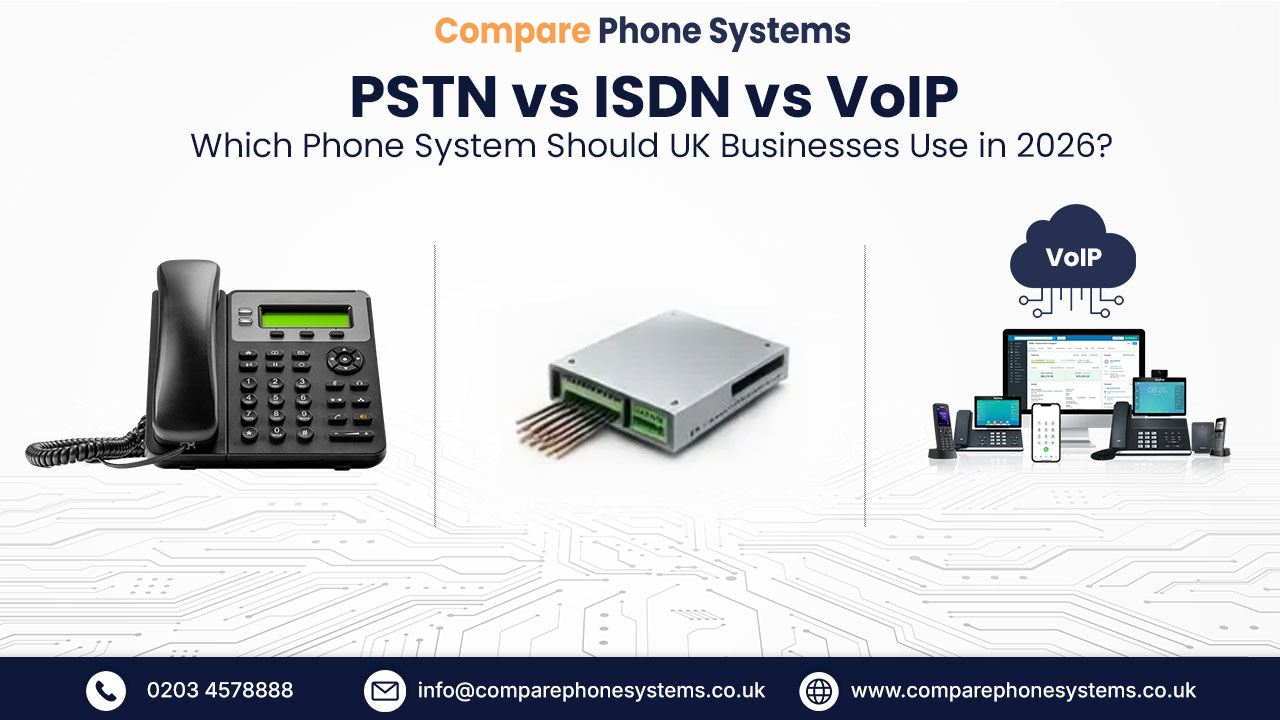
UK business phone systems are changing rapidly. Many organisations still rely on PSTN or ISDN for everyday calls, but these services are being withdrawn as the UK moves away from copper-based networks.
VoIP is replacing them. It operates over broadband rather than traditional phone lines and supports modern working practices, including remote and hybrid teams.
This guide explains the differences between PSTN, ISDN, and VoIP, how each system works, and what businesses need to consider before the switch-off.
Why UK Business Phone Systems Are Being Phased Out
Old networks run on copper wires made for basic voice calls. PSTN and ISDN both use this ageing setup. It coped fine years back, but trips over cloud apps and remote work today.
Providers now fit fibre and broadband to handle voice, video, and data smoothly. Openreach sets January 2027 as the end date for PSTN and ISDN, so VoIP steps up. Your business just needs to switch to internet calling to keep connected without worry.
What Is PSTN?
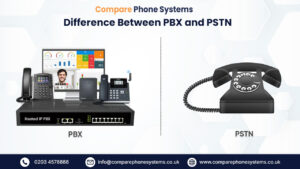
PSTN stands for Public Switched Telephone Network. It’s the traditional landline system UK businesses have relied on for decades. A PSTN line connects your premises to the local exchange via copper wire, letting you make and receive clear voice calls.
For years, this was the go-to choice. Familiar. Straightforward. Supported everywhere.
How PSTN Works
When you dial a PSTN call, the network creates a dedicated electrical path between the two phones. That line stays open the whole time—even through pauses. Each line handles just one call at a time.
Businesses added extra lines to cope with busier periods. It worked, but costs stacked up and management got tricky.
No internet needed. Calls keep working even if broadband drops. That dependability kept it popular in small offices for ages.
Why PSTN Has No Future Beyond 2026
PSTN’s copper network is ageing out across the UK. Telecoms plan full withdrawal by 2027. Once switched off, these lines simply stop.
UK businesses still using PSTN must switch soon. Traditional services won’t return.
Review your PSTN lines
What is ISDN, and why do businesses use it
ISDN (Integrated Services Digital Network) came in as a digital step up from PSTN. Businesses chose it for greater call capacity and clearer voice quality. Though signals travel digitally, ISDN runs over the same copper network as PSTN.
Growing offices and call centres made it their standard. One line handled multiple calls while linking straight to PBX systems.
How ISDN Works
ISDN divides a single copper line into separate digital channels. Each channel takes one call. Your team handles several conversations simultaneously—no extra lines needed.
UK businesses used two main types:
- ISDN2 – perfect for small and medium offices
- ISDN30 – built for larger firms with PBX setups
Direct connection to phone systems gave steady, predictable performance.
Why ISDN Is Being Switched Off in the UK
ISDN’s digital edge couldn’t escape the ageing copper problem. UK networks retire copper completely by 2027. ISDN services will be withdrawn at the same time.
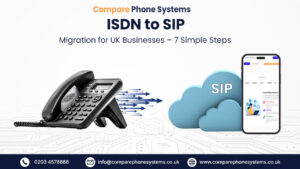
Businesses still on ISDN need VoIP or SIP trunking fast. Once copper’s gone, phone service stops completely.
What Is VoIP and Why It’s Replacing PSTN and ISDN
VoIP (Voice over Internet Protocol) is a modern phone system that delivers voice calls over broadband or fibre internet connections instead of traditional copper telephone lines. Rather than using dedicated physical circuits, VoIP converts voice into digital data and transmits it over IP networks.
This approach removes the dependency on PSTN and ISDN infrastructure and allows businesses to make and receive calls using desk phones, computers, and mobile devices, all connected through the internet.
How VoIP Calling Works Over Broadband
Your voice becomes digital packets sent safely across the internet. SIP handles connections to landlines and mobiles when needed. Dial and answer just like always. Behind the scenes, IP networks manage everything.
No line limits either. Handle dozens of calls at once no new infrastructure required.
Why VoIP Is the Only Long-Term Business Phone Option
VoIP matches modern UK business needs: cloud tools, remote teams, easy scaling. It integrates with Microsoft Teams, CRM platforms, and scales with your business. Copper’s getting scrapped by 2027.PSTN and ISDN will be withdrawn alongside the copper network. VoIP rides the fibre wave long-term. Your only future-proof choice.
Compare VoIP solutions
PSTN vs ISDN vs VoIP – Comparison
| Feature | PSTN | ISDN | VoIP |
|---|---|---|---|
| Network type | Copper phone lines | Copper phone lines | Broadband / fibre |
| Uses the internet | No | No | Yes |
| Call technology | Analogue, circuit-switched | Digital, circuit-switched | IP-based, packet-switched |
| Simultaneous calls | One per line | Multiple channels | Flexible and scalable |
| Call quality | Basic | Digital | HD voice |
| Supports remote working | No | No | Yes |
| Scalability | Poor | Limited | Easy |
| Line rental required | Yes | Yes | No |
| Long-term UK support | No | No | Yes |
| Status after 2027 | Switched off | Switched off | Fully supported |
This comparison makes one thing clear: PSTN and ISDN are legacy technologies, while VoIP is designed for modern, cloud-based business operations.
Compare phone systems
Benefits of VoIP for UK Businesses
Lower Call Costs
VoIP cuts out traditional line rentals and slashes rates especially to mobiles and abroad. Most businesses see real monthly savings straight away.
Advanced Calling Features
Built-in extras like voicemail-to-email, call recording, forwarding, and auto-attendants come standard. They save time and smooth out daily operations.
Remote and Mobile Working
No more office-bound calls. Team members pick up business lines from laptops or phone apps anywhere. Perfect for hybrid setups.
Simple Scalability
Add or drop users via the online dashboard no new lines needed. Scaling beats legacy systems hands down.
Business Continuity
Smart redirect rules keep you reachable during local glitches. Calls find staff wherever they’re working.
Why PSTN and ISDN Are No Longer Viable Options
1. PSTN and ISDN came from another era. They worked reliably back then, but don’t fit how UK businesses run today.
2. Costs keep climbing. Copper maintenance gets pricey line rentals, call charges, and fixing old gear all add up. Modern options beat them hands down on value.
3. No remote access either. Calls stay stuck at the office desk. No mobile apps, no cloud links, no hybrid team support.
4. Biggest issue? They’re finished. Both services will stop working entirely by 2027. No comeback, no support.
Which Phone System Should Your Business Choose in 2026?
The right phone system depends on how your business operates today and how it plans to operate over the next few years. With PSTN and ISDN being withdrawn, the choice is no longer equal.
When VoIP Is the Right Choice
VoIP is the right option for UK businesses that:
- Want to reduce call and line rental costs
- Have staff working across multiple locations or remotely
- Use cloud-based tools such as Microsoft Teams or CRM platforms
- Need a phone system that will continue working after 2027
- Value flexibility, scalability, and future-proof infrastructure
For most organisations, these conditions already apply.
Find the right system
What Happens If You Don’t Migrate in Time?
PSTN or ISDN lines cut off without a new system ready? Phone services stop working immediately. No grace period. No backup plan.
That means:
- Customers can’t reach you.
- Staff can’t dial out.
- Alarms, lifts, and monitoring systems fail.
- Card payment terminals and EPOS systems stop working.
- Business numbers vanish
Most UK firms can’t afford that hit. Early planners test properly, port numbers safely, dodge last-minute chaos. Rush jobs always cost more.
How to Migrate from PSTN or ISDN to VoIP
Switch to VoIP smoothly with a clear plan. No disruption if you step right.
Review Your Current Phone Setup
Spot all PSTN/ISDN lines in play. Check phones, faxes, alarms, EPOS anything wired up. Map how they link to PBX or hardware. Know your setup cold before touching it.
Check Broadband and Network Readiness
VoIP needs a rock-solid internet. Test your broadband or fibre for voice loads, especially peaks. Bigger teams? Go business-grade or dedicated.
Choose the Right VoIP Approach
Stick with old PBX and swap to SIP trunks? Or jump full cloud VoIP? Pick by hardware, budget, and future needs.
Transfer Existing Phone Numbers
Port business numbers over early. Customers keep dialling the same line. It takes time don’t leave it late.
Test Before Switching Off Legacy Lines
Run full checks: call sound, routing, voicemail, backups. Once confirmed, legacy lines can be safely switched off.
How We Help Businesses Choose the Right VoIP Phone System
Not all VoIP systems suit every business. The optimal solution depends on your operations, call volume, staff locations, and existing infrastructure.
We assist UK businesses by conducting thorough comparisons evaluating call patterns, broadband capacity, PBX compatibility, remote working requirements, and future scalability. Our recommendations deliver tailored VoIP or SIP solutions, avoiding generic packages.
This ensures seamless migration from PSTN or ISDN to a system that meets current needs, maintains reliability beyond 2026, and eliminates unnecessary costs or disruption.
Get expert guidance
FAQ
1. Is VoIP better than PSTN for business?
Yes, for most UK businesses. VoIP brings lower costs, richer features, and real flexibility. PSTN sticks to one call per line no modern tools, no remote access. VoIP fits how teams work today over broadband.
2. What happens after January 2027?
PSTN and ISDN lines go dead UK-wide. Businesses still on them lose service completely. Switch to VoIP or SIP beforehand it’s the only way to stay connected.
3. Can I keep my phone number?
Usually, yes. Most UK landline and business numbers port over to VoIP smoothly. Customers ring the same number post-switch. Providers handle porting as standard.
4. Can VoIP work with my existing PBX system?
Yes. Many businesses use SIP trunking to connect VoIP services to existing PBX systems, reducing the need for full hardware replacement.
5. How do I choose the right VoIP setup for my business?
The right VoIP setup depends on call volume, staff locations, broadband capacity, and future plans. We help UK businesses assess these factors and compare suitable options. Contact us for a tailored recommendation based on your requirements.
Final Verdict:
PSTN and ISDN served UK businesses well for decades. That chapter closes now. Both run on copper networks, getting switched off they just don’t match how teams work anymore.
VoIP isn’t merely better. It’s the future path. Lower costs. Modern features. Stays live past 2027, while others vanish.
Planning beyond 2026? VoIP delivers the reliability, flexibility, and continuity your business needs.